“Project Stargate” Ignites AI Revolution and the Nuclear Energy Renaissance
AI Inflection Point Is Here — And Power Shortages Are Already Starting
The global race for artificial intelligence has run headfirst into its biggest bottleneck yet: electricity.
Just as Elon Musk warned last year, the world is now seeing firsthand the limits of the power grid. Data centers everywhere are facing rising costs and power availability issues, as demand for AI computation surges beyond what traditional infrastructure can support.
The inflection point has arrived — and it’s highlighting an urgent need for reliable, scalable energy solutions like nuclear power.

AI requires staggering amounts of energy.
Goldman Sachs reports that a single ChatGPT query consumes 10 times more energy than a Google search.2
The only scalable solution is clear: nuclear power.
The Bulletin of Atomic Scientists puts it bluntly: “Big tech is turning to old reactors (and planning new ones) to power the energy-hungry data centers that artificial intelligence systems need.”3
That’s why demand for uranium to fuel the nuclear reactors is stronger than ever. And uranium prices are surging alongside it.
Since 2020, uranium stocks have been on fire:4
- Cameco (CCJ): +1065%
- NexGen Energy (NXE): +1050%
- Uranium Energy Corp (UEC): +1061%
And the recent momentum suggests that this may just be the beginning of the next leg up.
With global uranium demand accelerating—and a renewed wave of investment into nuclear energy as a clean, stable power source—the setup for the years ahead looks even more compelling than the last cycle.
“A ChatGPT query requires nearly 10 times as much electricity to process as a Google search.”
– Goldman Sachs
Some of the world’s sharpest investors are already taking notice. The creator of ChatGPT, for example, has placed a $100 million bet on nuclear fuel.5
And the opportunity still could be enormous.
One forecast predicts a potential uranium shortage of 100 million pounds—that’s more than 45% of the total market supply.6
That’s why companies like Future Fuels Inc. (OTC: FTURF | CSE: FTUR) are presenting a rare ground-floor opportunity to capitalize on this accelerating trend.
With AI technology evolving at breakneck speed, the demand for energy and uranium is set to surge even higher.
The window of opportunity is still open, and this report will give you the insights you need while the story is still unfolding.
2025: AI Goes Supersonic

The year kicked off with a groundbreaking event, the reveal of “Project Stargate,” the largest AI project in history.
President Trump, Oracle’s Larry Ellison, OpenAI’s Sam Altman, and Softbank’s Masayoshi Son announced the largest data center project in history.
They committed $500 BILLION an eye-watering sum that’s 300 times more than the cost of the biggest data center in the U.S. today.7
Within a week China fired back when they unveiled DeepSeek AI which sent shockwaves through the tech industry.
The New York Times captured the moment perfectly when it proclaimed, “DeepSeek A.I. is a win for China.”8
The global AI arms race had just hit an inflection point as these two massive forces began racing to secure ever-increasing power and speed for AI technologies.
The chart below illustrates this explosive moment:
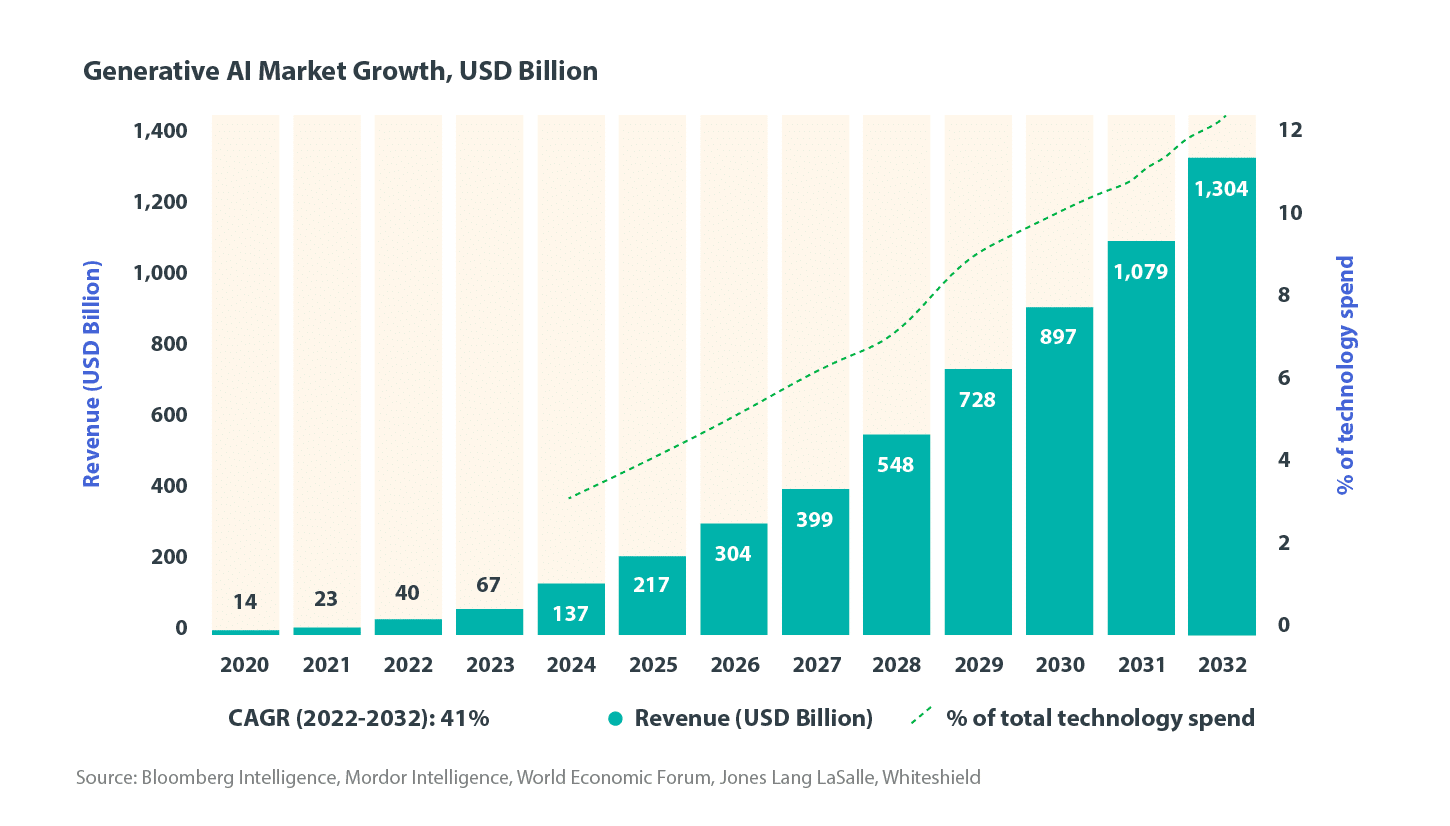
While 2024 marked the initial surge in AI activity, all signs point to an even larger boom in 2025.
And data centers are at the heart of it all. You’ve probably heard about the boom in these critical infrastructures, and you might even live near one of the many being built.
But most people don’t grasp the true scale of what’s coming. Just look at the capital expenditure budgets of the world’s largest and wealthiest tech companies—and the sheer number of data centers these massive investments can build.10
- Microsoft: $80 billion in 2025
- Amazon: $100 billion in 2025
- Meta: $65 billion in 2025
- Alphabet: $75 billion in 2025
Add in Project Stargate and that’s hundreds of billions poured into AI-driven infrastructure in a single year. Over the next six years, we’ll build more data centers than in the past 35 years combined.
That’s mind-blowing. But so is the power required to run them. Remember, a single ChatGPT query consumes 10 times more energy than a standard Google search.
This is where nuclear energy, uranium, and innovative companies like Future Fuels Inc. (OTC: FTURF | CSE: FTUR) enter the picture.
The AI revolution isn’t just about chips and servers, it’s also about meeting the energy demand. And the companies that power this shift could be among the biggest winners of the decade.
The $3 Trillion Secret That Makes ChatGPT Work
These cavernous data centers are the hidden work horses behind AI breakthroughs, consuming staggering amounts of power that very few people truly comprehend.
But once you grasp the scale, you’ll see why many uranium stocks are up over 1000% and why early-stage uranium stocks like Future Fuels Inc. (OTC: FTURF | CSE: FTUR) are gaining momentum.
It all begins with the A.I. chips. Specifically, Nvidia’s cutting-edge chips. These are the chips that transformed Nvidia from a relatively unknown company a decade ago into one as valuable as tech giants like Alphabet (Google) and Apple.11
At the heart of Nvidia’s success is the H100 processor, a standout achievement in modern technology.
The chip may be able to fit in your hand, but its power is staggering.
This chip contains 80 BILLION transistors.12 For perspective, that’s more than 1.1 million times the number of transistors in the original Macintosh.13
Each H100 chip costs $30,000—about the price of a new car.14 Despite the price, Nvidia can’t manufacture them fast enough. Even the tech elite can’t get enough.
In an effort to secure more chips, Larry Ellison joked that during a dinner with Elon Musk, they told Nvidia’s CEO Jensen Huang, “Please take our money. No, no, take more of it. We need you to take more of our money. Please.”15
But here’s the downstream impact of all this, and it should be your focus.
The electricity demands of these high-powered chips are astronomical. Each H100 chip consumes 16.8 kWh per day. That’s the same amount of electricity a 2,000-square-foot house uses daily.
Now, imagine dozens of these GPUs in a single rack, multiplied by hundreds of racks across a data center. You end up with 15,000 of these chips in a warehouse-sized building, consuming as much electricity as a decent-sized city.
And that’s just one data center.
With Project Stargate’s $500 billion commitment, alongside other massive energy users like Microsoft, Google, Amazon and Meta, the demand for power is exploding. And that’s why companies like Future Fuels Inc. (OTC: FTURF | CSE: FTUR) are drawing unprecedented attention.

Goldman Sachs Pinpoints Historic Surge
AI data centers are popping up everywhere and their energy demands are skyrocketing.
The scale of power consumption is as astonishing as the speed of innovation. Even Goldman Sachs flagged a sharp rise in electricity usage coinciding with the launch of ChatGPT and other AI breakthroughs.
The computing power behind these systems requires an immense amount of energy, as clearly illustrated in the chart that follows.
For years, electricity demand from data centers remained flat. But as ChatGPT approached its launch, power consumption soared. Goldman’s chart shows the turning point:
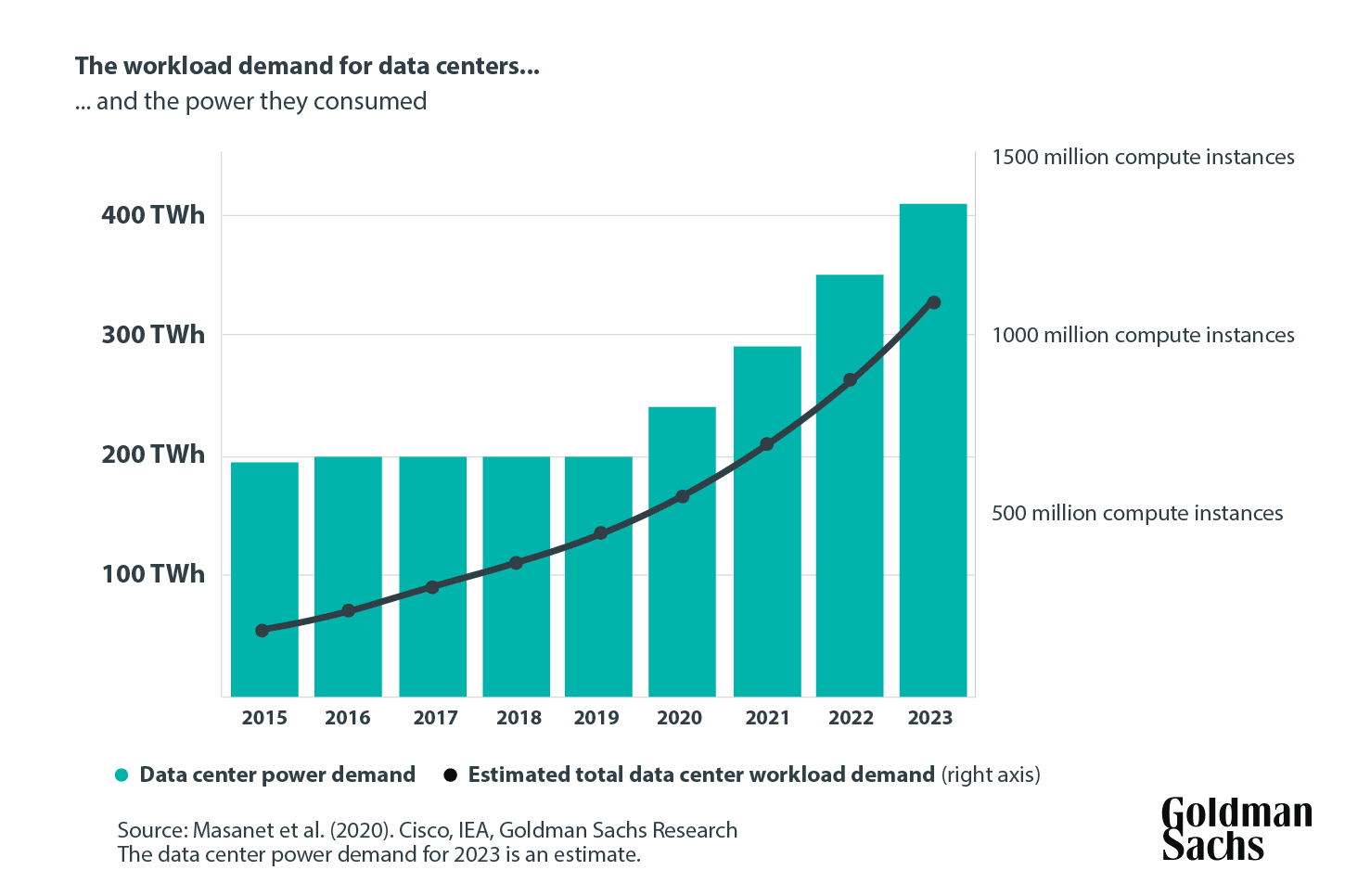
That’s a historic surge in power demand. And with data centers continuing to grow rapidly, the only realistic solution to meet this massive demand is nuclear power.
Nuclear Is No Longer “Someday”—It’s Happening Now
In July 2025, Google signed a first-of-its-kind agreement to purchase power from MIT spinout Commonwealth Fusion Systems—marking a major milestone for next-generation energy.
As CFS CEO Bob Mumgaard explained in The Wall Street Journal:
“This isn’t some far-off future concept. This is real, commercial fusion power—happening now.”17
Big Tech isn’t waiting. It’s moving decisively to secure scalable, clean power for the AI era.
Data centers are a big part of that growth, with the electricity they consume set to double by 2026.
Where will all this extra power come from?
Definitely not coal, it’s no longer viable. The last U.S. coal plant came online in 2013 and more have been shut down progressively since then.19
Oil? Way too expensive and dirty. Natural gas isn’t a realistic option either.20
The energy density of uranium in nuclear power is just far too great to ignore.21
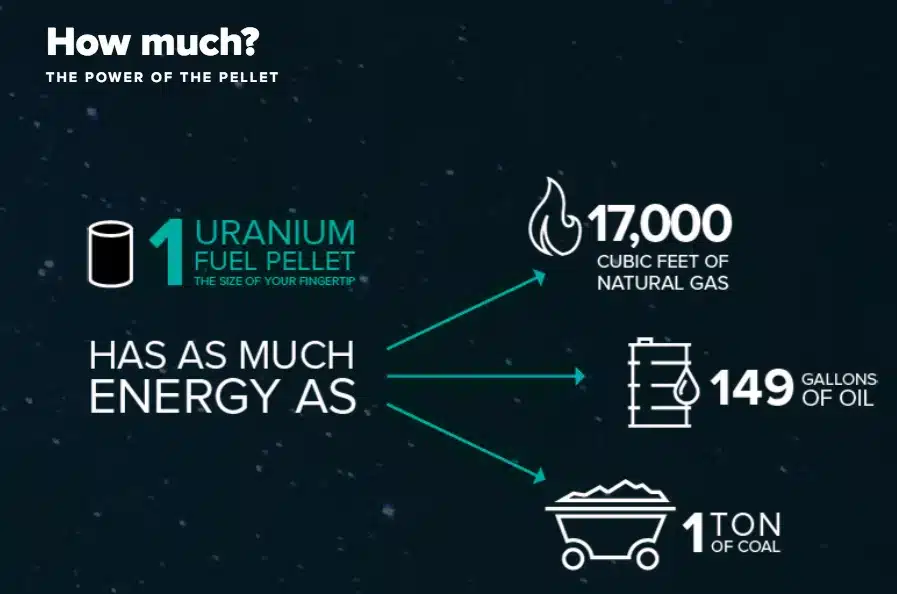
On top of all that, nuclear power is clean, reliable, and scalable.
It’s the ideal solution to power always-on data centers driving global innovation.
Modern advances in nuclear technology are making reactors safer and more efficient than ever before.
This breakthrough creates tremendous opportunities for companies like Future Fuels Inc. (OTC: FTURF | CSE: FTUR) to help meet the rising energy demands of the global economy.
But they’ll need to move fast. The future of nuclear energy is arriving quicker than anyone expected. A new generation of reactors can now be built and commissioned faster than ever before.
New Nuclear: Cheaper, Safer, and FASTER
The nuclear energy industry is advancing rapidly, and small modular reactors (SMRs) are emerging as one of its most exciting groundbreaking innovations.
Tech giants like Alphabet are already tapping into their potential, placing their first order to power data centers with SMRs.22
Meanwhile, long-time nuclear leaders like France are charging ahead with ambitious plans to develop and deploy SMRs on a large scale.
But what exactly makes these reactors so revolutionary? SMRs are compact, efficient, and engineered with next-level safety features.23
They can be as small as a shipping container or seamlessly integrated into conventional buildings, making them incredibly versatile.
Unlike traditional nuclear plants, SMRs are specifically designed to reduce risks. Even in the rare event of malfunction, their advanced containment systems prevent any contamination from escaping.
This superior safety makes it possible to place SMRs closer to cities and densely populated areas.
Beyond their safety benefits, SMRs offer significant financial advantages. Smaller units can start at around $50 million, while the largest cost about $3 billion—a fraction of the $50 billion price tag for traditional nuclear plants.24
With unmatched safety, affordability, and efficiency, SMRs are set to reshape the energy landscape.
The rapid expansion of the SMR market is creating huge opportunities for companies like Future Fuels Inc. (OTC: FTURF | CSE: FTUR) which is poised to capitalize on this transformative trend.
That’s because the surge in SMR construction is expected to put serious pressure on uranium supplies, potentially leading to major shortages.
The chart below shows how SMR growth is driving a surge in nuclear capacity:25
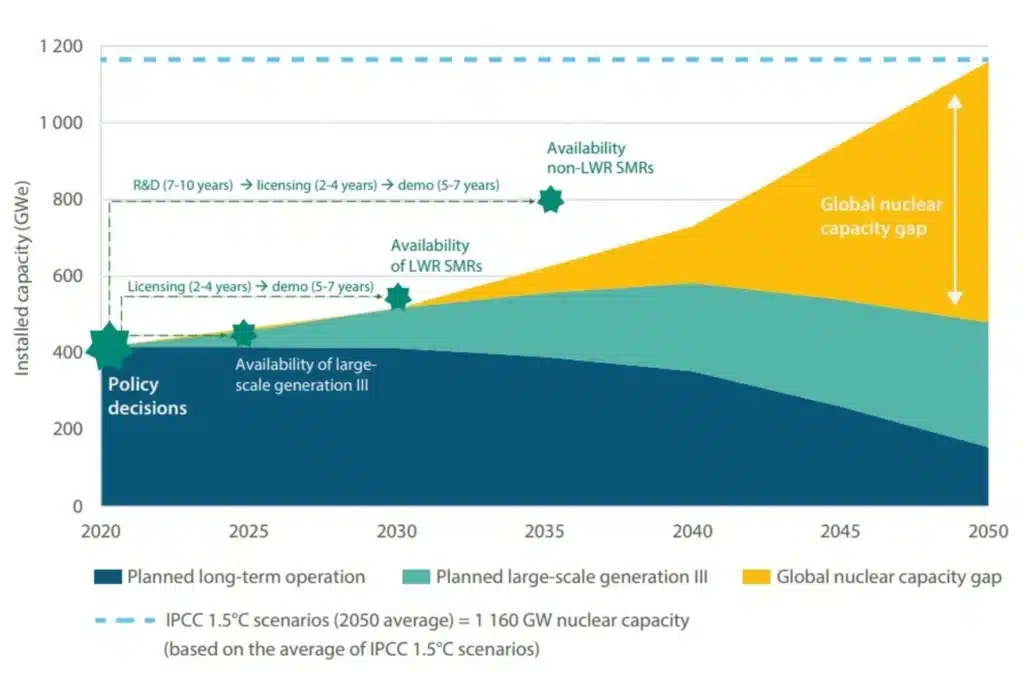
That’s a major surge in demand—and it’s catching attention across the entire industry.
Its why RBC stated, “Nuclear revival is going to need a lot more uranium.”26
But this spike is hitting a market where supply and demand are already tightly balanced, pushing the potential for uranium shortages even higher.
Nuclear Revival Drives Potential Uranium Shortage
The uranium market is tightening with a massive supply deficit on the horizon.
According to the World Nuclear Association, the supply-demand gap is widening at a rapid pace, and that’s exactly the kind of situation that excites savvy investors.
Their chart shows an ever-widening supply gap that’s fast approaching:
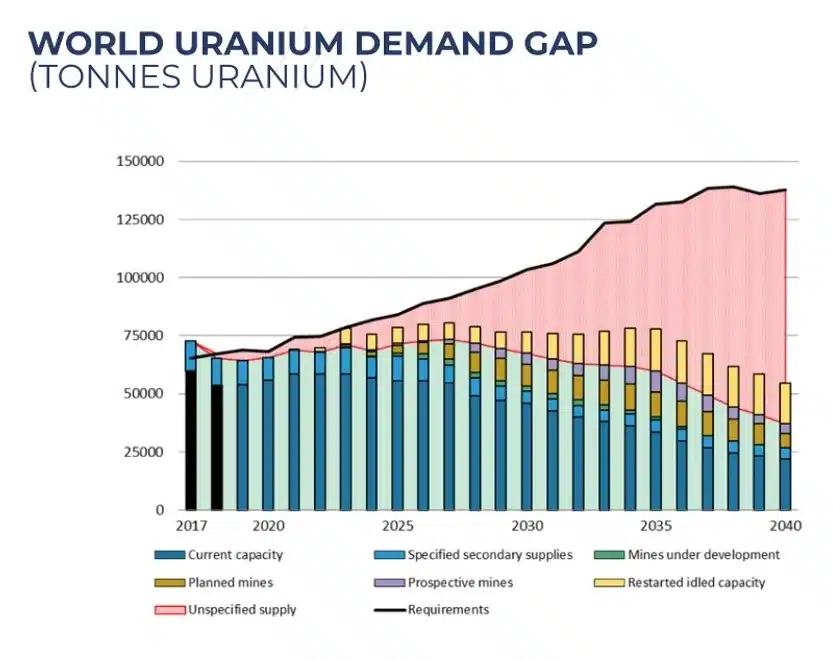
This kind of supply and demand gap is exactly what gets investors excited.
CruxInvestor warns, “The supply gap could exceed 100 million pounds within a few years. This structural deficit won’t be solved by price signals alone, given the extreme costs of building new mines.”28
That’s a big reason why Future Fuels Inc. (OTC: FTURF | CSE: FTUR) is actively developing its own uranium projects to capture value from this rising demand.
Even tech visionary Sam Altman, founder of OpenAI and creator of ChatGPT, has recognized the opportunity, investing heavily in a company positioned to benefit from this rapidly evolving market.
ChatGPT Founder Goes Nuclear
Sam Altman believes nuclear power is the key to keeping up with AI’s rapid growth. That’s why he’s backing Oklo Inc. (OKLO), a new nuclear energy company focused on clean, reliable power.
Altman took Oklo public in May 2024 through AltC Acquisition Corp., a SPAC he led.28
The deal sparked major investor interest, sending Oklo’s stock soaring as the company became a leader in modular nuclear energy.
By January 2025, Altman’s stake in Oklo had passed $100 million, making it a huge winner in the nuclear and uranium boom.29
Yet, the revolution is still unfolding and there’s ample opportunity for new uranium companies like Future Fuels that are targeting the greatest uranium reserves in the world.
“ Canada aims to become world's biggest uranium producer as demand soars”30
– Financial Post
6 Reasons to Review Future Fuels Now

1. AI is Using More Power Than Ever
Artificial intelligence (AI) is growing at lightning speed, and it needs a lot of electricity to keep running.
Big projects like Project Stargate and China’s DeepSeek AI are building more data centers, which consume enormous amounts of power.
Future Fuels can help meet this demand by providing uranium, which is the essential fuel of nuclear energy—the best way to power AI.
2. Nuclear Energy is the Only Real Solution
Fossil fuels are being phased out, and wind or solar energy struggle to produce enough power all the time.
Nuclear is the only clean, reliable, and powerful energy capable of meeting growing demand. Future Fuels focuses on uranium, which is critical for nuclear power, especially as new types of small, safe reactors are being built faster and cheaper.
3. Eight Million-Pound Discovery
Future Fuels owns the Mountain Lake Deposit in Nunavut, Canada, a place rich in high grade uranium. With an 8-million-pound discovery already on-site there is significant potential for further discoveries.
Canada is known as the "Saudi Arabia of uranium" due to its abundant reserves and stable mining friendly government. Canada provides a prime setting for long-term energy investments. This makes Future Fuels a major contender in the energy market.
4. Rising Uranium Prices Mean Big Opportunities
With a global push to build more data centers and bring nuclear reactors online, the demand for uranium is going way up. This could cause uranium prices to soar, creating a big opportunity for companies like Future Fuels.
Given its already substantial uranium resources, Future Fuels is in a perfect spot to benefit from higher prices and growing demand.
5. Big Tech Leaders Are Betting on Nuclear Power
Top tech leaders like Sam Altman (creator of ChatGPT) and Larry Ellison (Oracle founder) are investing in nuclear energy because they recognize its crucial role in powering AI.
Altman is backing a company called Oklo, which is pioneering next generation nuclear reactors. As more tech companies look for clean, reliable energy, Future Fuels is in an ideal position to capitalize.
6. Future Fuels Is Ground Floor Level Valuation and Growth Potential
Future Fuels in situ uranium resource is worth nearly 20x its current market cap, and even after multiple conservative discounts, the project remains significantly undervalued.
At just a fraction of its potential worth, the Mountain Lake project alone is still valued at more than double the company’s total market cap.
With additional untapped potential yet to be explored, Future Fuels presents a rare opportunity in a strengthening uranium market.
Do your due diligence, but consider addingFuture Fuels Inc. (OTC: FTURF | CSE: FTUR)your speculative portfolio.
Canada Is the “Saudi Arabia of Uranium”
Future Fuels Inc. (OTC: FTURF | CSE: FTUR) is ready to meet soaring uranium demand and its focus is squarely on Canada.
Why Canada? Because Canada plays a key role in the shift toward a nuclear-powered future.
The U.S. simply does not produce enough uranium.
Even though 18% of U.S. electricity comes from nuclear power, the country produces only 5% of the uranium it consumes.31
Canada, on the other hand, stands out as one of the world’s leading uranium suppliers. It produces 27% of all uranium used in nuclear reactors—that’s more than five times what the U.S. produces. This is why Canada is often called the “Saudi Arabia of uranium.”32
Canada offers:
- Massive accessible reserves
- Stable mining friendly governance
- World-class mining sector expertise
And it’s been in the news lately as Trump and Canada’s Prime Minister, work out trade disputes.
Despite the occasional bumps, the U.S. and Canada keep things friendly, because ultimately the U.S. needs Canada’s uranium. Without it, up to 1/6th of the U.S. could go dark.
At the end of the day, Canada and the U.S. are natural uranium partners—one supplies, the other consumes.
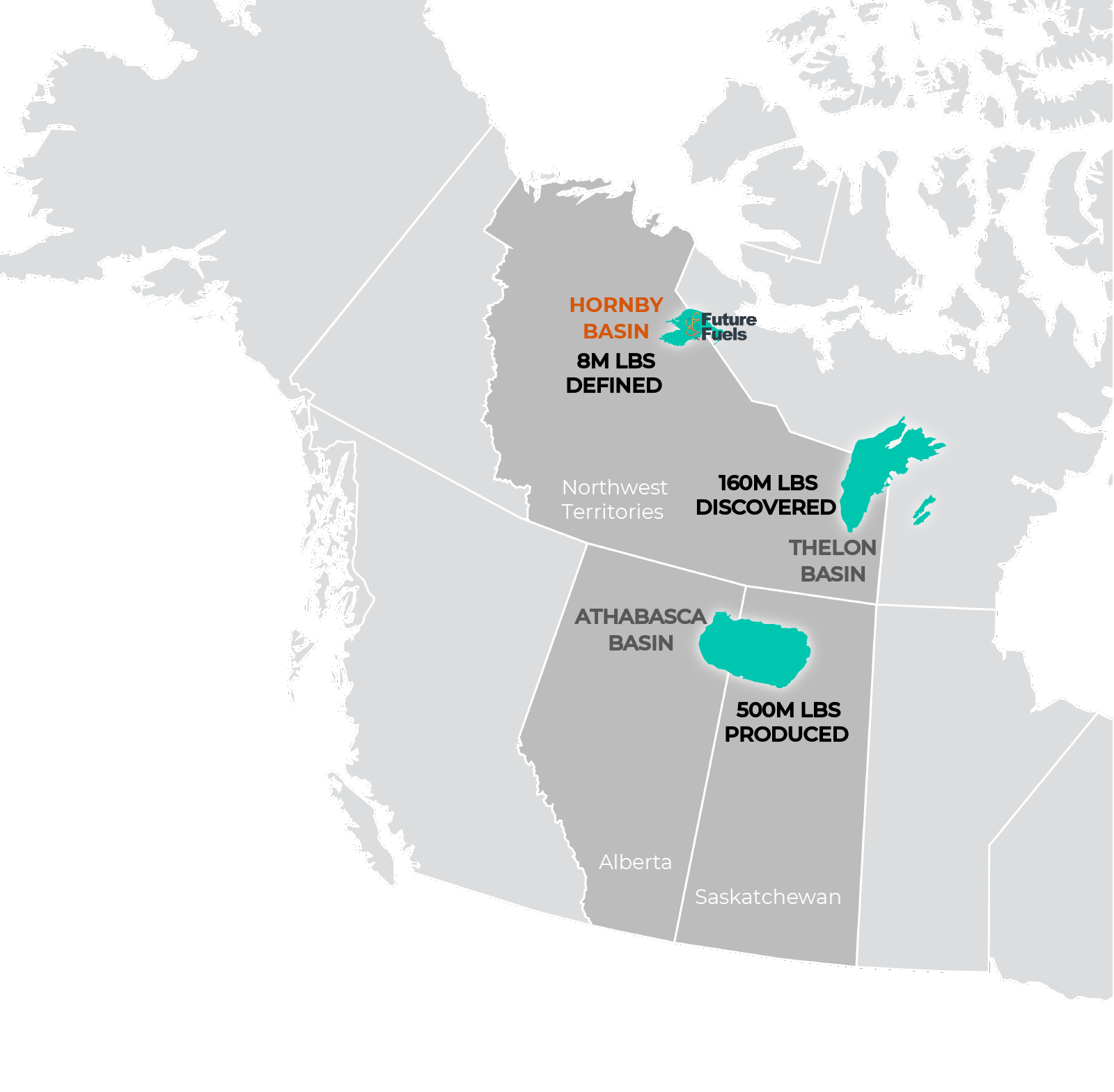
And Future Fuels Inc. (OTC: FTURF | CSE: FTUR) already has a strong foothold in Canada’s vast uranium resources.
Future Fuels Targets Canada’s Original Uranium Source
Future Fuels is focused on the historic uranium deposits of Nunavut, Canada’s northernmost territory.
Nunavut has deep roots in uranium mining, dating back to the start of the Nuclear Age.
The town of Port Radium, originally a radium mine in the 1930s, became one of the world’s first uranium mining operations in the 1940s.33
While Port Radium was an early producer, uranium deposits across Nunavut have drawn attention for decades.
Future Fuels now holds a major stake in this historic, uranium-rich region with huge potential at its Mountain Lake exploration project.
The property spans over 3,000 square kilometers and includes more than 40 underexplored uranium showings beyond the main deposit.
But that’s just the exploration upside.
Mountain Lake already hosts a known uranium discovery.
A Ground Floor Uranium Play With Exceptional Value
Future Fuels’ Mountain Lake project in Nunavut has long been known to host uranium.
Originally explored by Esso Resources (now ExxonMobil) during the uranium boom of the 1970s, the project unveiled a deposit of 8.2 million pounds of uranium oxide.
This discovery alone sets up Future Fuels Inc. (OTC: FTURF | CSE: FTUR) for significant growth potential.
The numbers speak for themselves.
At current uranium prices, eight million pounds are worth around $600 million in situ (on-site) value.34
That’s almost 20X more than Future Fuels’ current market value of $33 million.
But of course, that’s before factoring in the costs of designing, building, and operating a mine.
So, let’s be a bit conservative.
Cut that total value figure in half to $300 million which is still 8x higher than Future Fuels’ market value.
But let’s not stop. Cut it in half again to $150 million. Even with these reductions, that’s still 4x Future Fuels’ current market cap of $30 million.
Not bad, right?
And that’s just the tip of the iceberg because there’s even more untapped potential waiting to be explored at Mountain Lake.

Future Fuels Targets Big Growth on the Path Forward
Just as the uranium market is heating up, Future Fuels Inc. (OTC: FTURF | CSE: FTUR) is strategically positioned to take advantage.
Its Mountain Lake project in Nunavut holds significant exploration potential.
Recent radioactive readings confirm strong indicators of additional uranium deposits.
Future Fuels has a clear strategy to unlock this potential:
- Conduct extensive surface sampling to uncover new uranium-rich zones
- Employ advanced geophysical modeling to map underground resources
- Expand existing deposits to boost the known resource base
With solid historical data and a prime location, Future Fuels is perfectly poised to capitalize on the rising demand for uranium in today’s evolving energy landscape.
Leadership Team
Future Fuels is led by a team with expertise in both finance and geology, helping the company grow in the energy and resource industries.

Rob Leckie – Chief Executive Officer
Rob has over 20 years experience in finance, working in investment banking, investment management, and corporate leadership. He was a Vice President at Dundee Corporation, where he found and managed mining investment opportunities.
He has been a director for several junior resource companies, including Nova Royalty Corp., Reunion Gold, Magna Terra Minerals, First Nordic Metals, and True North Nickel.
He also co-founded Somerset Energy Partners, Valkyrie Oil Trucking Corp., and South Viking Energy Corp., bringing valuable financial and industry knowledge to Future Fuels.

Nick Rodway – Head Geologist
Nick is a geologist and business leader, currently serving as the President and CEO of Core Assets Corp. He holds a bachelor’s degree in geology from Memorial University of Newfoundland and a master’s degree in Exploration and Mining Leadership from Queen’s University.
He is also a member of the Association of Engineers and Geoscientists of British Columbia. For over 10 years, he has helped build companies, raise money, manage investor relations, and acquire mining properties. He was the Founder and President of Exploits Gold Corp., a private company that was bought by Exploits Discovery Corp. in 2020.
With Rob’s financial experience and Nick’s geological expertise, Future Fuels has a strong leadership team ready to drive the company forward.
Uranium Offers Significant Upside for Any Speculative Portfolio!
The global AI boom is on a collision course with a critical power shortage, and experts like Elon Musk are sounding the alarm about an energy crunch in 2025.
As AI technologies evolve, its appetite for massive computing power and energy continues to skyrocket.
Traditional energy sources simply can’t keep up with this surge, and renewable options, while promising, aren’t scaling fast enough to meet the growing needs.
This is where nuclear power emerges as the only scalable, reliable solution to drive the AI revolution.
As a result, uranium demand is hitting record levels, creating shockwaves across global markets.
Uranium stocks are on fire with Cameco up 1065%, NexGen Energy up 1050%, and Uranium Energy Corp up 1061% since early 2020. And they’ve all closed 2024 strong.
Many analysts predict this is just the beginning for uranium as the supply struggles to keep pace with escalating demand.
Current forecasts highlight a looming uranium supply gap that will only intensify as more countries adopt nuclear power to support their energy grids and AI infrastructure.
For investors, this represents a unique window of opportunity.
The uranium bull market is in full swing, and companies like Future Fuels Inc. (OTC: FTURF | CSE: FTUR) are well-positioned to capitalize on this trend.
As the AI revolution accelerates and energy demands climb, the need for stable, long-term power solutions will drive continued growth in the nuclear sector.
Talk to your broker today about Future Fuels Inc. (OTC: FTURF | CSE: FTUR). The time to investigate is now as AI power consumption continues to soar.

GENERAL NOTICE AND DISCLAIMER – PLEASE READ CAREFULLY THE FOLLOWING NOTICE AND DISCLAIMER MUST BE READ AND UNDERSTOOD AND YOU MUST AGREE TO THE TERMS CONTAINED THEREIN BEFORE USING THIS WEBSITE OR SUBSCRIBING TO OUR NEWSLETTER. We are engaged in the business of advertising and promoting companies. All content on our website is for informational purposes only and should not be construed as an offer or solicitation of an offer to buy or sell securities. Neither the information presented nor any statement or expression of opinion, or any other matter herein, directly or indirectly constitutes a solicitation of the purchase or sale of any securities. Neither the owner of www.wallstreetstar.com nor any of its members, officers, directors, contractors or employees are licensed broker-dealers, account representatives, market makers, investment bankers, investment advisors, analyst or underwriters. Investing in securities, including the securities of those companies profiled or discussed on this website is for individuals tolerant of high risks. Viewers should always consult with a licensed securities professional before purchasing or selling any securities of companies profiled or discussed on wallstreetstar.com. It is possible that a viewer’s entire investment may be lost or impaired due to the speculative nature of the companies profiled. Remember, never invest in any security of a company profiled or discussed on this website unless you can afford to lose your entire investment. Also, investing in micro-cap securities is highly speculative and carries an extremely high degree of risk. wallstreetstar.com makes no recommendation that the securities of the companies profiled or discussed on this website should be purchased, sold or held by viewers that learn of the profiled companies through our website wallstreetstar.com has been retained by an unrelated third party to perform promotional and advertising services for a limited time with respect to the company we are profiling or discussing on this website and in exchange for such services has received cash compensation from such third party.
Mineral exploration and development are highly speculative and are characterized by a number of significant inherent risks, which may result in the inability to successfully develop projects for commercial, technical, political, regulatory or financial reasons, or if successfully developed, may not remain economically viable for their mine life owing to any of the foregoing reasons. There is no assurance that Future Fuel Inc. will be successful in achieving a return on shareholders’ investment and the likelihood of success must be considered in light of the [early] stage of operations.
Future Fuel Inc’s ability to identify Mineral Resources in sufficient quantity and quality to justify development activities and/or its ability to commence and complete development work and/or commence and/or sustain commercial production operations at any of its projects will depend upon numerous factors, many of which are beyond its control, including exploration success, the obtaining of funding for all phases of exploration, development and commercial mining, the adequacy of infrastructure, geological characteristics, metallurgical characteristics of any deposit, the availability of processing technology and capacity, the availability of storage capacity, the supply of and demand for uranium and other minerals, the availability of equipment and facilities necessary to commence and complete development, the cost of consumables and mining and processing equipment, technological and engineering problems, accidents or acts of sabotage or terrorism, civil unrest and protests, currency fluctuations, changes in regulations, the availability of water, the availability and productivity of skilled labour, the receipt of necessary consents, permits and licenses (including mining licenses), and political factors, including unexpected changes in governments or governmental policies towards exploration, development and commercial mining activities.
Furthermore, cost over-runs or unexpected changes in commodity prices in any future development could make the projects uneconomic, even if previously determined to be economic under feasibility studies. Accordingly, notwithstanding the positive results of one or more feasibility studies on the projects, there is a risk that Future Fuel Inc. would be unable to complete development and commence commercial mining operations at one or more of the mineral properties which would have a material adverse effect its business, financial condition, results of operations and prospects.
For a more comprehensive overview of the risks related to Future Fuel Inc’s business, please review Future Fuel Inc.’s continuous disclosure documents, each filed under the Company’s profile at www.sedarplus.ca.
PAID ADVERTISEMENT. This communication is a paid advertisement and is not a recommendation to buy or sell securities. Rumble Strip Media Incorporated and its owners, managers, employees, and assigns (collectively “Rumble Strip Media”) has been paid for Future Fuel Inc.. (the “Company”) Two Hundred and Fifty Thousand Canadian Dollars (CAD $250,000) plus applicable taxes for an ongoing marketing campaign and is including this article, among other things. This compensation is a major conflict with our ability to be unbiased. This communication is for entertainment purposes only. Never invest purely based on our communication.
SHARE OWNERSHIP. The owner of Rumble Strip Media may be buying and selling shares of this issuer for its own profit. This is why we stress that you conduct extensive due diligence as well as seek the advice of your financial advisor or a registered broker-dealer before investing in any securities. This relationship and the compensation to be received by us is a major conflict with our ability to be unbiased.
Questions regarding this website may be sent to info@wallstreetstar.com. Some of the content on this website contains forward-looking information within the meaning of Section 27A of the Securities Act of 1993 and Section 21E of the Securities Exchange Act of 1934 including statements regarding expected continual growth of a company and the value of its securities. In accordance with the safe harbor provisions of the Private Securities Litigation Reform Act of 1995 it is hereby noted that statements contained herein that look forward in time which include everything other than historical information, involve risk and uncertainties that may affect a company’s actual results of operation. A company’s actual performance could greatly differ from those described in any forward looking statements or announcements mentioned on this website or the websites contained within. Factors that should be considered that could cause actual results to differ include: the size and growth of the market for the company’s products; the company’s ability to fund its capital requirements in the near term and in the long term; pricing pressures; unforeseen and/or unexpected circumstances in happenings; etc. and the risk factors and other factors set forth in the company’s filings with the Securities and Exchange Commission. However, a company’s past performance does not guarantee future results. Generally, the information regarding a company profiled or discussed on this website is provided from public sources. Wallstreetstar.com makes no representations, warranties or guarantees as to the accuracy or completeness of the information provided or discussed. Viewers should not rely solely on the information obtained through our website or in communications originating from our website. Viewers should use the information provided by us regarding the profiled companies as a starting point for additional independent research on the companies profiled or discussed in order to allow the viewer to form his or her own opinion regarding investing in the securities of such companies. Factual statements, or the similar, made by the profiled companies are made as of the date stated and are subject to change without notice and wallstreetstar.com has no obligation to update any of the information provided. Wallstreetstar.com, its owners, officers, directors, contractors and employees are not responsible for errors and omissions. From time to time certain content on this website is written and published by our employees or third parties. In addition to information about our profiled companies, from time to time, our website will contain the symbols of companies and/or news feeds about companies that are not being profiled by us but are merely illustrative of certain activity in the micro cap or penny stock market that we are highlighting. Viewers are advised that all analysis reports and news feeds are issued solely for informational purposes. Any opinions expressed are subject to change without notice. It is also possible that one or more of the companies discussed or profiled on this website may not have approved certain or any statements within the website. Wallstreetstar.com encourages viewers to supplement the information obtained from this website with independent research and other professional advice. The content on this website is based on sources which we believe to be reliable but is not guaranteed by us as being accurate and does not purport to be a complete statement or summary of the available data. Third Party Web Sites and Other Information This website may provide hyperlinks to third party websites or access to third party content.
Wallstreetstar.com, its owners, officers, directors, contractors and employees are not responsible for errors and omissions nor does wallstreetstar.com control, endorse, or guarantee any content found in such sites. Wallstreetstar.com does not control, endorse, or guarantee content found in such sites. By accessing, viewing, or using the website or communications originating from the website, you agree that wallstreetstar.com, its owners, officers, directors, contractors and employees, are not responsible for any content, associated links, resources, or services associated with a third party website. You further agree that wallstreetstar.com, its owners, officers, directors, contractors and employees shall not be liable for any loss or damage of any sort associated with your use of third party content. Links and access to these sites are provided for your convenience only. Wallstreetstar.com uses third parties to disseminate information to subscribers.
Wallstreetstar.com also places cookies on your computer to allow third party ads to retarget your IP address.. Although we take precautions to prevent others from obtaining our subscriber list, there is a risk that our subscriber list, through no wrong doing on our part, could end up in the hands of an unauthorized party and that subscribers will receive communications from unauthorized third parties. We encourage viewers to invest carefully and read the investor issuer information available at the web sites of the United States Securities and Exchange Commission (SEC). The SEC has launched an investor-focused website to help you invest wisely and avoid fraud at www.investor.gov and filings made by public companies can be viewed at www.sec.gov and/or the Financial Industry Regulatory Authority (FINRA) at: www.finra.org. In addition, FINRA has published information at its website on how to invest carefully at www.finra.org/Investors/index.htm. Income Disclaimer: Testimonials and examples used here are exceptional results which may not apply to the average purchaser. They are not intended to represent or guarantee that anyone will achieve the same or similar results through our service. The use of our information should be based on your own due diligence, and you agree that our company is not liable for any success or failure of your business that is directly or indirectly related to the use of our information. As with any business, your results may vary, and will be based on your individual capacity, business experience and expertise. There are no guarantees concerning the level of success you may experience. Income statements made by our customers are only estimates of what they have earned; there is no guarantee that you will make these levels of income. When using our information, you accept the risk that these earnings and income statements differ by individual. There is no assurance that examples of past earnings can be duplicated in the future. There are unknown risks in business and on the internet that we cannot anticipate which can reduce results. We therefore cannot guarantee your future results or success, and are not responsible for your actions.
References
- 1. https://newatlas.com/technology/elon-musk-ai/
- 2. https://www.goldmansachs.com/insights/articles/AI-poised-to-drive-160-increase-in-power-demand
- 3. https://thebulletin.org/2024/12/ai-goes-nuclear/
-
4. Uranium stock returns from 3/20/2020 to 2/10/2025
UEC – (7.10/0.57) -1 = 1061%
CCJ – (50.82/6.30) -1 = 1065%
NXE – (6.69/0.59) -1 =1050% - 5. 2.6% of $6.5B market cap - https://finance.yahoo.com/news/sam-altman-backed-energy-stock-surges-amid-ai-driven-nuclear-power-renaissance-172512779.html
- 6. Current annual production of 49,355 tonnes (=109 million pounds) - https://world-nuclear.org/information-library/nuclear-fuel-cycle/mining-of-uranium/world-uranium-mining-production
- 7. https://www.fool.com/investing/2025/01/25/president-trump-just-announced-project-stargate-3/
- 8. https://www.nytimes.com/2025/02/02/world/asia/ deepseek-china-ai-censorship.html
- 9. https://www.consultancy-me.com/news/9108/ai-to-lift-demand-for-data-center-services-to-new-heights
- 10. https://www.cnbc.com/2025/02/08/tech-megacaps-to-spend-more-than-300-billion-in-2025-to-win-in-ai.html
- 11. https://www.bnnbloomberg.ca/business/technology/ 2025/01/15/nvidias-3-trillion-rally-is-on-edge-wall-street-is-unfazed/
- 12. https://www.datacenterdynamics.com/en/news/nvidia-reveals-new-hopper-h100-gpu-with-80-billion-transistors/
- 13. https://apple.fandom.com/wiki/Motorola_68000
- 14. https://www.trgdatacenters.com/resource/nvidia-h100-price/
- 15. https://www.msn.com/en-us/money/other/please-take-our-money-larry-ellison-on-begging-nvidia-ceo-jensen-huang-for-ai-chips/ar-AA1qFdEA
- 16. https://www.goldmansachs.com/insights/articles/AI-poised-to-drive-160-increase-in-power-demand
- 17. https://www.wsj.com/articles/google-signs-deal-to-buy-fusion-energy-from-bill-gates-backed-nuclear-startup-9017672b
- 18. https://www.bloomberg.com/opinion/articles/2024-01-19/personal-wealth-uranium-prices-keep-going-up-but-many-still-want-it
- 19. https://www.eia.gov/todayinenergy/detail.php?id=54559
- 20. https://world-nuclear.org/information-library/economic-aspects/economics-of-nuclear-power
- 21. https://www.nek.si/en/longevity-for-sustainability/production-performance/high-energy-density-of-uranium-is-one-of-key-advantages-of-nuclear-energy
- 22. https://blog.google/outreach-initiatives/sustainability/google-kairos-power-nuclear-energy-agreement/
- 23. https://www.cnsc-ccsn.gc.ca/eng/reactors/smr/about/
- 24. https://www.cleantech.com/will-small-modular-reactors-surpass-regulatory-and-supply-chain-hurdles-to-fill-the-need-for-stable-baseload-power/
- 25. https://www.innovationnewsnetwork.com/realising-the-potential-of-small-modular-reactors/40061/
- 26. https://uraniumequities.com/uranium-reports/2024/11/Uranium_RBC_Nov21_2024.pdf
- 27. https://www.cruxinvestor.com/posts/uranium-production-shortfall-signals-wider-deficit-amidst-rising-equities-reaction
- 28. https://oklo.com/newsroom/news-details/2024/Oklo-Inc.-Begins-Trading-on-the-New-York-Stock-Exchange/default.aspx
- 29. 2.6% of $6.5B market cap - https://finance.yahoo.com/news/sam-altman-backed-energy-stock-surges-amid-ai-driven-nuclear-power-renaissance-172512779.html
- 30. Financial Post Jan 06, 2025 https://financialpost.com/financial-times/canada-biggest-uranium-producer-demand-soars
- 31. https://world-nuclear.org/information-library/country-profiles/countries-t-z/usa-nuclear-fuel-cycle
- 32. https://www.eia.gov/uranium/marketing/
- 33. https://www.rcaanc-cirnac.gc.ca/eng/1445630103716/1618401563211
- 34. 8 million lbs*$75/lb-https://tradingeconomics.com/commodity/uranium